


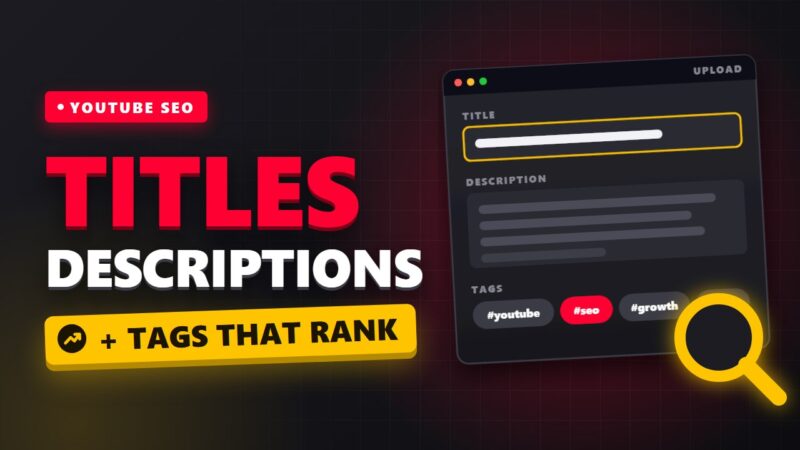
YouTube SEO is comparable to website SEO in many ways, since YouTube’s own algorithm relies on your title, description, and viewer behavior signals to decide how widely to recommend a video. Still, getting the title, description, and tags right is one of the most effective levers every creator can pull without spending anything extra. In this guide, we cover the practical fundamentals of optimizing your YouTube videos for search.
Writing a Title That’s Both Searchable and Clickable
Your video title should include your core target keyword, the exact phrase real viewers are searching for, while still being compelling enough to earn a click. Front-loading the keyword near the start of the title generally helps the algorithm, but it still needs to read naturally so it appeals to an actual human being rather than sounding stuffed with keywords.
Writing a Complete, Useful Description
The description is one of the most underused SEO fields by far. The first two to three lines should summarize the video’s content together with your core keyword, since this is what shows up in search results before someone clicks “show more.” Adding timestamps for different sections and relevant links for further viewing also improves the overall viewer experience.
Choosing the Right Tags
Tags help YouTube understand your video’s exact topic and place it alongside relevant content. Combining broad and specific tags, along with your channel name, helps the algorithm place your video in the right context more precisely.
The Importance of Engagement and Watch Time
Beyond metadata, the algorithm pays close attention to audience engagement and watch time. A video that keeps viewers watching from the same first few seconds sends a strong signal that the content has real quality, which is the foundation every other search-ranking factor is built on.
Regularly Reviewing Your Metrics
SEO isn’t a one-time task; it needs ongoing monitoring. Checking click-through rate, average watch time, and keyword rankings in YouTube Studio helps you identify which elements are actually working and which ones need adjusting.
Common SEO Mistakes to Avoid
Many creators stuff a title with as many keywords as possible, which backfires in search rankings, since no single keyword ends up clearly targeted. It’s better for each video to have one specific, well-chosen primary keyword that both the algorithm and viewers can quickly identify, so they know exactly what the video delivers.
Studying the Competition
Looking at the titles, descriptions, and tags of top-performing channels in the same space can reveal useful ideas for optimizing your own content, without needing to copy their approach outright. Turn this into an ongoing habit rather than a one-time review.
Conclusion
YouTube SEO is a continuous process, not a single action. By optimizing your title, description, and tags carefully, you can meaningfully increase how discoverable your videos are in YouTube’s search results.


Leave a Comment